bone spur
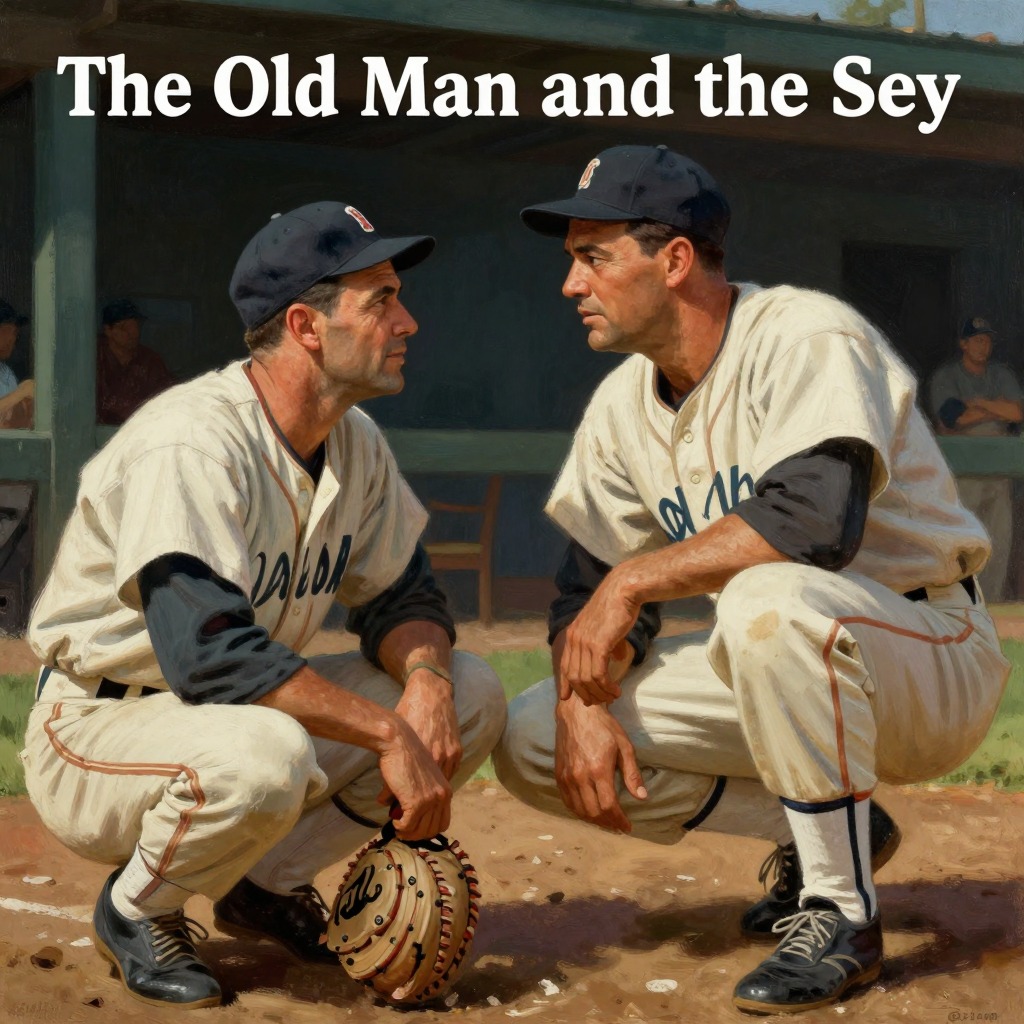
The bone spur is a recurring motif in Ernest Hemingway's The Old Man and the Sea, serving as a symbolic measure of pain, endurance, and heroic comparison. Santiago repeatedly invokes the bone spur of the great DiMaggio to frame his own physical suffering, transforming a specific medical condition into a touchstone for the code of the fisherman and the nature of heroism.
Definition and Appearance
A bone spur, which Santiago translates into Spanish as un espuela de hueso, is a medical condition that the old man has never personally experienced. He first introduces the concept while thinking about the great DiMaggio, the New York Yankees star whom he reveres. Santiago reflects that DiMaggio "does all things perfectly even with the pain of the bone spur in his heel," establishing the spur as a mark of supreme athletic grace achieved in spite of chronic agony. The old man wonders whether a bone spur can be as painful as the spur of a fighting cock in one's heel, a comparison that links DiMaggio's suffering to the world of animal combat Santiago knows from his own life.
Use and Operation
Santiago uses the bone spur as a mental yardstick for his own ordeal. While lashed to the great marlin, with his hands cut and his back aching, he asks himself whether DiMaggio "would stay with a fish as long as I will stay with this one," and answers that he is sure DiMaggio would, "since he is young and strong" and because his father was a fisherman. Yet the old man immediately doubts: "But would the bone spur hurt him too much?" This question reveals that Santiago measures his own worth not by the absence of pain but by his capacity to endure what he imagines DiMaggio endures. Later, after killing the marlin and fighting off the first Mako shark, Santiago again thinks of DiMaggio: "I think the great DiMaggio would be proud of me today. I had no bone spurs. But the hands and the back hurt truly." He then wonders, "Maybe we have them without knowing of it," suggesting that the boundary between a named condition and unnamed suffering may be arbitrary.
Connections and Consequences
The bone spur motif connects Santiago's solitary struggle to the larger world of baseball, which serves as his link to human community and excellence. The old man's thoughts of DiMaggio's bone spur arise during the most intense phases of his battle with the fish and the sharks, moments when his own body is pushed to its limits. The spur becomes a way for Santiago to frame his pain as part of a heroic tradition rather than as mere physical breakdown. When he later reflects on his own hands as a handicap, he asks, "do you think my hands were as great a handicap as the bone spurs?" and immediately admits he cannot know, having "never had anything wrong with my heel except the time the sting ray stung it." This admission underscores that Santiago's identification with DiMaggio is an act of imaginative empathy rather than literal equivalence.
Significance
The bone spur functions as a key element in Hemingway's exploration of what it means to be "beaten but not defeated." By measuring himself against a hero who performs perfectly despite a chronic injury, Santiago transforms his own temporary wounds—cuts, cramps, exhaustion—into a comparable test of will. The bone spur is never seen, never diagnosed, and never experienced by the old man; it exists purely as an idea, a narrative prosthesis that allows Santiago to elevate his physical suffering into a form of grace. In this way, the bone spur becomes a symbol of the code that defines Hemingway's protagonist: the ability to endure pain without complaint and to perform one's appointed task with precision, regardless of the body's limitations.